
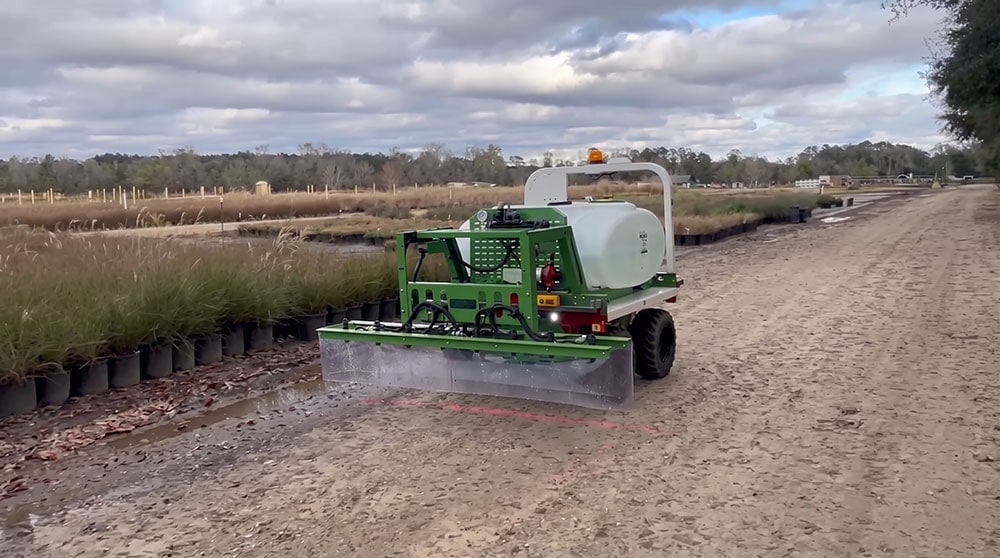
For decades, growers have had to make a critical trade-off: effective weed control or the high costs of manual labor and heavy chemical application.
Standard spraying still ties up skilled workers, keeping crews in the field, walking rows, driving up input costs, and exposing them to long-term chemical risks. Autonomous systems change that.
As the pressure to protect margins meets the rising costs of inputs, growers are turning to autonomous spraying technology. The goal isn’t just to replace manual labor, it’s to scale the way it works. By leveraging autonomous spot spraying, you can reduce chemical usage by up to 75% while keeping crews out of the spray zone.
Precision is the Bottom Line
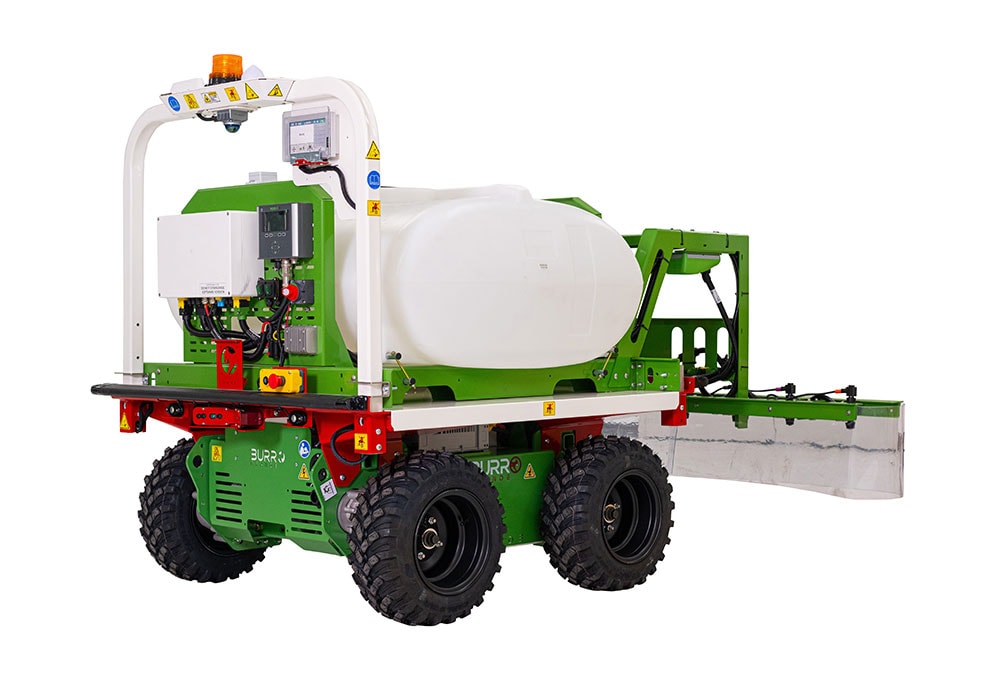
The shift toward precision weed control begins with better detection. Manual broadcast spraying is an outdated model; you shouldn’t be paying to spray weedless grounds. Systems like Sprayito + WEED-IT utilize infrared chlorophyll sensing to change how you treat weeds.
- Infrared chlorophyll detection. Spray is targeted only at weeds, not your crop or your soil.
- 99% accuracy. Maintains performance across changing light conditions.
- PWM rate control. Keeps your application consistent, slashing waste and input bills.
The result is straightforward: up to 75% less chemical usage. That translates directly to lower input costs and a measurable improvement in your bottom line. Calculate ROI here.
A “Hands-Off” System
When you take the operator out of the spray zone, you aren’t just checking a safety box; you are evolving your operational model. Systems like Burro Grande 15 + Sprayito allow your crew to move from manual, fatigue-prone labor to skilled, supervisory roles.
Using tools like BOSS Web, your team manages the spraying system remotely, letting the robot handle the repetitive, time-consuming tasks. This shift eliminates three major operational drains:
- Drift exposure. The robot is in the spray zone, not your crew.
- Time-consuming tasks. Crews can shift their focus to higher-value work that actually moves your operation forward.
- Inconsistent application. A uniform application that manual operators simply can’t match.
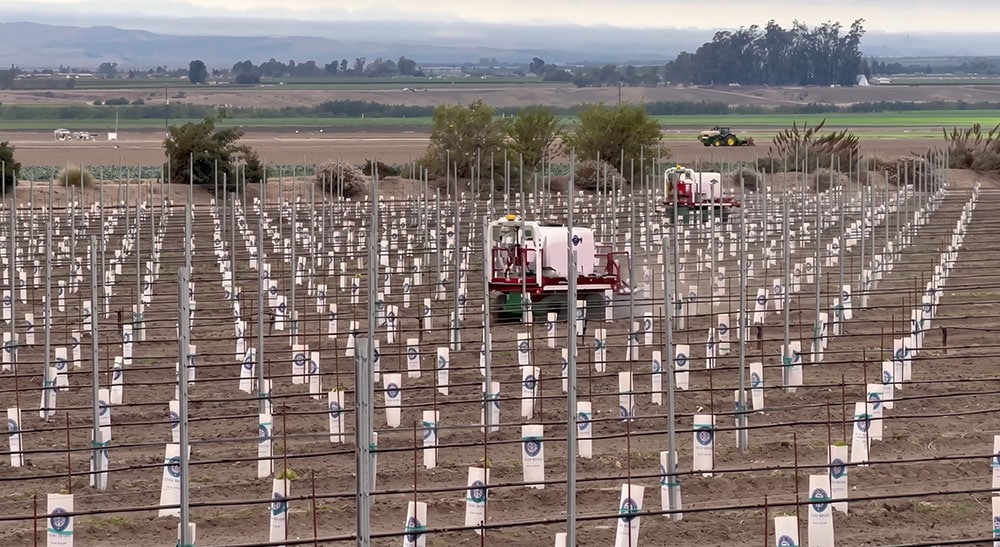
Built to Scale Your Operation
Autonomous farming equipment isn’t about replacing your team; it’s about making your operation more resilient. As labor gets tighter and more expensive, autonomous tools provide a way to stabilize your costs.
Because Burro is a modular platform, its applications aren’t limited to the spraying season. The same robot that handles your precision weed control is also fully equipped to mow rows and haul, tow, and transport product throughout the year, maximizing your return on investment.
The Bottom Line
We’ve reached a point where effective, high-precision spraying doesn’t have to come at the cost of your profit and crew. Autonomous systems deliver the precision crops need, the cost control operations demand, and the safety your team deserves.
Same job. Better outcome.
To learn more about how to integrate autonomous spraying into your operation, drop us a line!
FAQs
By utilizing advanced infrared chlorophyll sensors, our autonomous spot sprayer identifies and treats only the weeds, rather than applying herbicide to the entire field. This precision weed control technology can reduce chemical consumption by up to 75%, significantly lowering input costs while promoting more sustainable precision agriculture practices.
Yes. Burro’s autonomous robotics remove the operator from the “spray zone.” By keeping workers out of the path of drift and chemical contact, you drastically minimize exposure risks, helping your operation meet stricter farm safety standards and improving long-term health outcomes for your crew, all while keeping your existing safety equipment for necessary peripheral tasks.
Growers typically see an autonomous sprayer ROI through two channels: immediate, massive savings on expensive herbicides due to targeted application, and improved labor efficiency. Because systems like the Burro Grande are modular, they can be repurposed for hauling and transport, maximizing the value of your equipment investment year-round. Calculate your ROI.
Not at all. Burro’s autonomous farming equipment is designed for seamless integration. Operators transition from manual labor to a supervisory role, using platforms like BOSS Web to manage fleet movement and spraying parameters remotely. This allows your existing team to maintain high productivity without the physical strain of walking rows.
These systems use sophisticated navigation technology to maintain speed, turn compensation, and accurate row-following, even in complex terrain. This level of robotic weed control ensures consistent, uniform application that is often more precise than manual spraying, which is frequently prone to fatigue-driven human error.