
Labor has become one of the biggest challenges of running an operation, especially if you work in the agriculture or industrial sectors. Crews are harder to staff and the work hasn’t gotten any less demanding.
Leaders in the ag tech industry have developed a solution: collaborative robots. Their purpose? Not replace labor, but amplify it by automating the “rinse and repeat” tasks (mowing rows, towing trailers, spraying weeds, carrying harvested produce, etc).
Collaborative robots like Burro are changing how operations approach the day to day by developing an autonomous workforce designed to operate alongside laborers. The result? Less strain on crews, and smarter use of the labor you already have.
What Are Autonomous, Collaborative Robots?
Autonomous co-bots are designed to operate safely in shared environments with workers. They’re built to support everyday workflows and adapt to real-world conditions alongside your workforce, like a coworker.
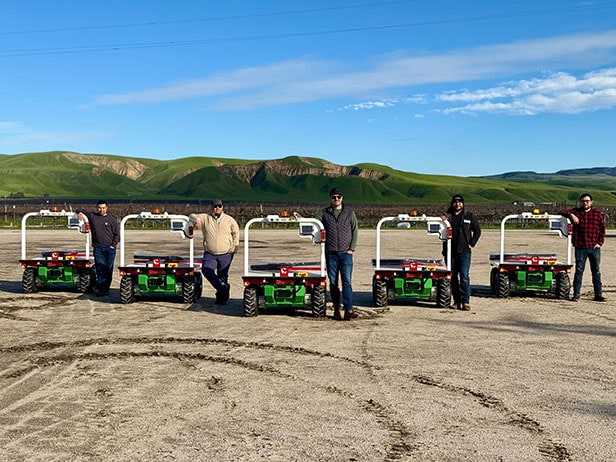
The Shrinking Workforce
The truth is, labor availability is shrinking.
In the U.S., the average age of hired farmworkers continues to rise, and fewer younger workers are entering physically demanding agricultural roles. As a result, competition for labor across industries has increased.
The issue is not that labor is disappearing entirely. The issue is that there are fewer people available for repetitive, time-consuming field tasks, and those tasks still need to get done on schedule.
Collaborative robots like Burro are designed to fill that gap by taking on the tedious, time-sucking work so crews can focus on supervision, decision-making, and higher-value activities.
Where They’re Valuable
Our autonomous robots perform best when they are assigned work that is:
- Repetitive
- Time-consuming
- Physically demanding
- Predictable, but frequent
Here’s just an example of the types of jobs where cobots like Burro make a huge impact:
| Task | Result |
| Mowing | Maintains consistent row quality while freeing crews for other critical tasks. |
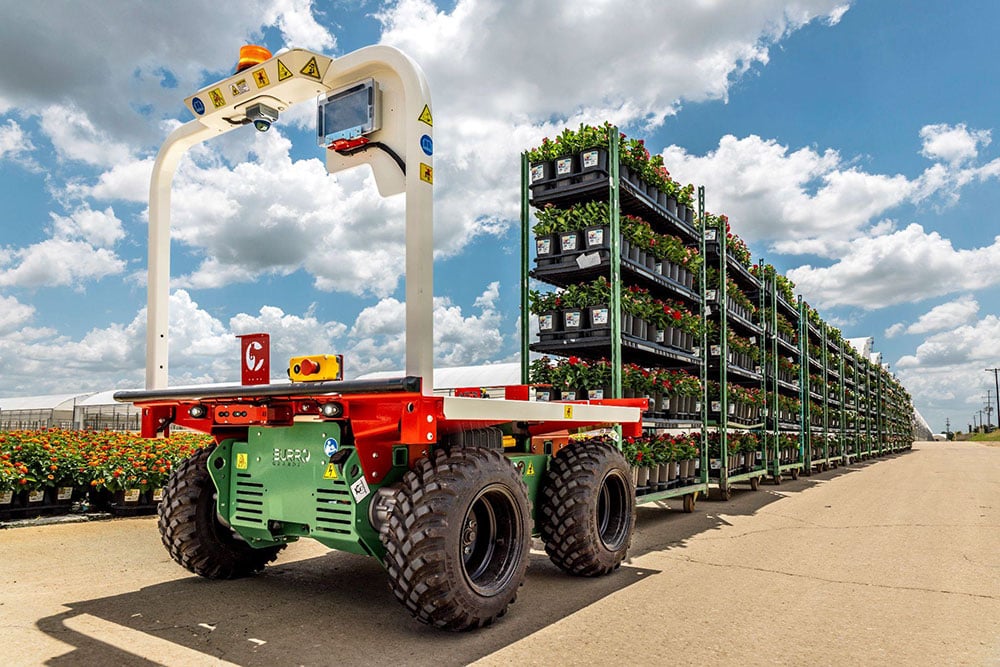
| Towing | Handles heavy loads across varying terrain without crew fatigue. |
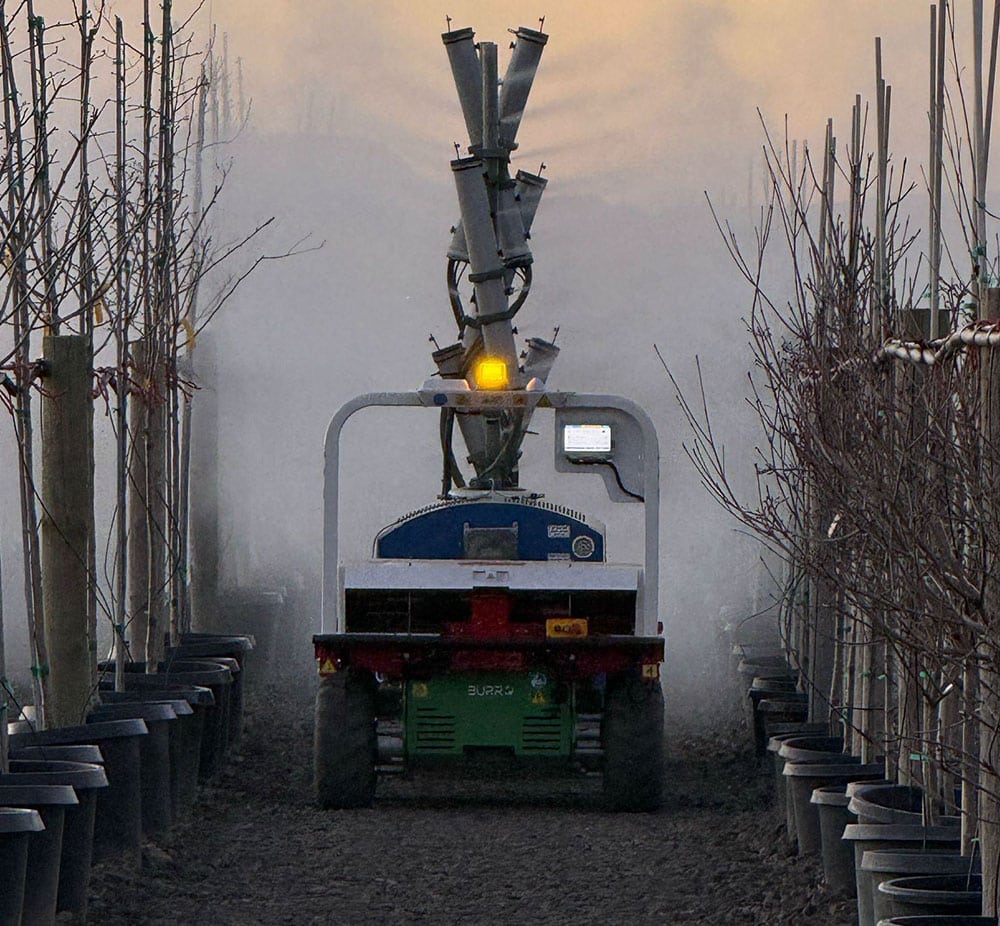
| Spraying | Sprayito reduces labor costs and chemical usage by up to 75%. |
| Carrying | Transports harvest bins and materials autonomously, eliminating constant back-and-forth. |
By automating these tasks, operations reduce fatigue, limit wasted time, and keep skilled workers focused on work that requires human judgment.
How Burro Improves Day-to-Day Operations
- Autonomy you control. Set your route and let it run. Burro handles the repetitive work while you stay in control through simple management tools.
- Free crews for higher-value work. When Burro handles transport and logistics, crews spend less time walking back and forth and more time actively managing crops, equipment, and quality.
- Increase consistency. Robots perform the same task the same way every time. That consistency helps operations plan labor more effectively and reduces variability in daily output.
- Reduce physical strain. Repetitive hauling and towing take a toll on workers over time. Offloading that work improves safety and helps retain experienced crew members longer.
Why Burro?
Burro was built specifically to support crews, not replace them. Our robots operate as autonomous assistants that follow predefined routes and workflows while staying flexible enough to adapt to changing field conditions.
| Traditional Labor | With Burro |
| Crews waste valuable time and energy hauling bins and walking between rows, often in extreme heat. | Crews stay focused on skilled work that requires their expertise and judgment. |
| Labor stretched dangerously thin during peak harvest season, risking delays and crop loss. | Work distributed more evenly across your team, with robots handling the grunt work 24/7. |
| Fatigue compounds over 10-12 hour days, leading to injuries, turnover, and declining morale. | Physical strain reduced significantly, helping you retain experienced workers season after season. |
| Output is limited by how much your crew can physically endure in a single day. | More consistent daily productivity that doesn’t decline as the day wears on. |
What Makes Burro Different
- Built for real conditions. Adapts to outdoor environments with all-terrain capability. Works in any weather, any terrain, any conditions.
- Works alongside crews safely. Easy to operate and manage through BOSS. Includes remote control operation and built-in safety features.
- On-site setup and integration. Whenever you are in the world, our team comes to you and integrates Burro directly into your workflow, alongside your crew.
- Support after the sale. With our ongoing support, we keep your fleet working.
Burro is not a single-task machine. It is an autonomous platform that adapts as operations evolve.
Autonomous Robots Are the Long-Term Answer
Agriculture and industrial operations don’t need automation that replaces people; they need autonomy that makes limited labor more effective.
Collaborative robots help operations:
- Do more with fewer workers
- Reduce physical strain on crews
- Maintain productivity during labor shortages
- Scale without major operational changes
Collaborative robots are not about replacing labor. They are about making labor work smarter, not harder.
Ready to See It in Action?
See how Burro takes the heavy lifting off your crew and puts productivity back in your control. Schedule a demo today.
Frequently Asked Questions
Are collaborative robots safe to use around people?
Yes. Collaborative robots are designed to operate in shared environments and follow safety protocols appropriate for human-robot interaction.
How long does it take to deploy a collaborative robot?
Most collaborative robots require significantly less setup time than traditional automation. Burro deployments are handled on-site with hands-on training to ensure crews are comfortable from day one.
Do collaborative robots replace workers?
No. Collaborative robots are designed to support labor by handling repetitive tasks, allowing workers to focus on skilled, higher-value work.
Are collaborative robots cost-effective for smaller operations?
Automation that reduces labor strain and increases consistency can improve long-term operational efficiency, especially for labor-intensive crops.
What types of operations benefit most from collaborative robots?
Specialty crops, vineyards, nurseries, depot yards, industrial settings, and any operation with repetitive transport needs see some of the strongest returns.