
Farm labor in America is in a bad spot, and immigration policy is making it worse. The workforce that agriculture has depended on for decades is shrinking. Period.
With smaller crews, growers are forced to find new farm labor solutions that ease the strain of less hands and still keep things moving. The easiest answer? Autonomy.
Agricultural technology for labor shortage is becoming the top priority for operations across the country as they look for ways to bridge the gap.
Here’s the no BS situation, and how growers are filling the gaps.
Seasonal Labor Shortages Are Real, and Getting Bigger
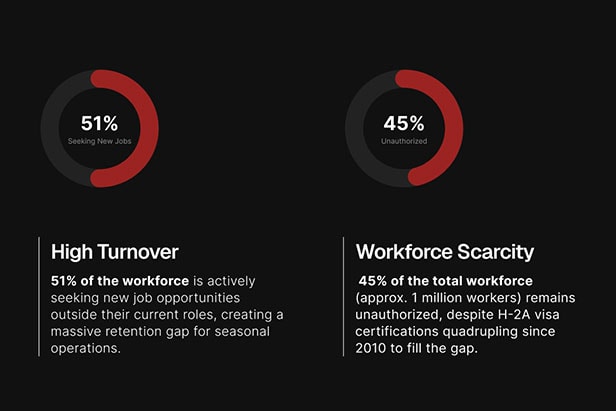
About half of U.S. farmers can’t hire all the hands they need, and those operations are running about 20% short on average. Between March and July of 2025 alone, the U.S. agricultural workforce dropped by 155,000 workers (about 7%). The farm labor crisis isn’t just slowing things down; it’s threatening domestic food production and prices.
Why is there a farm labor shortage in the U.S.? For starters, 68% of the U.S. farm workforce is foreign-born, and about 42% of all farmworkers are undocumented. Stricter immigration enforcement means that the workforce is shrinking, and it’s not being replaced.
H-2A Is Growing Because It Has To
The H-2A visa compliance program lets growers bring in legal temporary workers from other countries. It has become the primary pressure valve for farm labor, and demand keeps climbing. H-2A certification has grown 185% over the past decade with nearly 400,000 positions certified in 2025. Growers aren’t turning to H-2A because it’s a good system, but because it’s the only option. And it comes with real costs.
Fruit and vegetable producers already spend up to 40% of their total production costs on labor. The impact of H-2A visa changes on farm labor costs has been significant, with the required minimum wage ranging from $14.83/hour to $20/hour, and has risen about 30% over the last five years. Add housing, transportation, and compliance costs on top, and it is obvious why growers are looking for labor-saving agriculture alternatives like Burro (AKA, cost-effective automation for small-scale farms) to offset these expenses.
What Being Short-Staffed Actually Costs
Running an operation with 20% less hands isn’t just an inconvenience; it changes the decisions you make. Which rows get picked. Which quality grades get left behind. Which contracts you can and can’t honor. It means pushing your existing crew harder, which drives up labor fatigue, injuries, and turnover. It means paying overtime during your most critical weeks.
If enforcement actions pull workers mid-season, you absorb that cost whether the work gets done or not.
What Autonomy Can and Can’t Do Right Now
Autonomous robots aren’t picking your berries or pruning your vines. Selective harvest is a hard problem and it hasn’t been fully solved at commercial scale for most crops. That’s the honest answer.
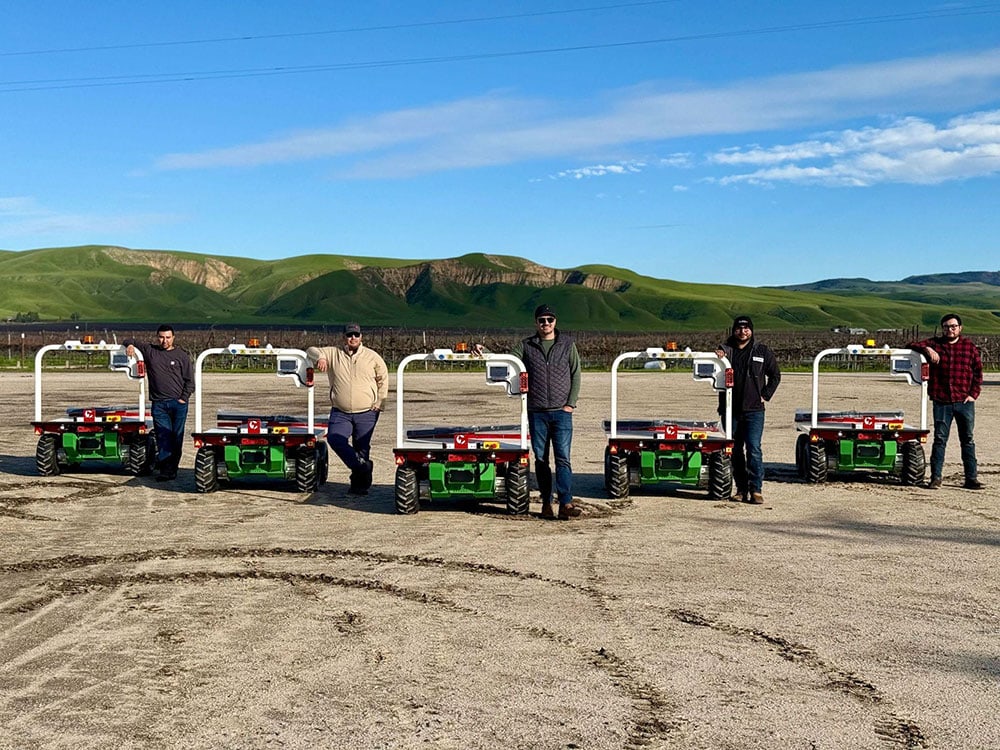
What our farm workforce technology is doing, effectively, on real farms, is handling the support work that eats up labor hours without requiring skilled judgment. Hauling bins. Transporting materials across the farm. Moving harvested produce from field to pack house. Mowing. Towing. Scouting. Spot spraying.
This work is physically demanding and repetitive. It wears crews down over a long season.
When comparing automation vs manual labor in agriculture, the goal isn’t to replace the human element; it’s to augment it. When autonomous farming equipment takes on the rinse and repeat work, output goes up. Productivity goes up. Efficiency goes up. Worker burnout goes down. Retention improves. In a tight labor market, that multiplier matters.
Waiting Has a Cost, Too
One thing we often hear from growers: “We aren’t ready for autonomy right now.” The problem is that it’s become sink or swim. The Department of Labor projects H-2A demand will reach 550,000 positions by 2030, meaning the gap between what farms need and what’s available is only going to grow. It’s now or never.
Where to Start
- Audit your labor hours by task type. Most operations are surprised how much time goes to hauling, transport, and support work versus actual harvest. That’s where automation has the most immediate impact.
- Model your worst case. If your workforce dropped 20% mid-season, what breaks? If the answer is a lot, that’s worth planning around now.
- Evaluate autonomous ag tech solutions, like Burro. Look into AI-powered farm equipment for labor shortage solutions that don’t require massive infrastructure overhauls.
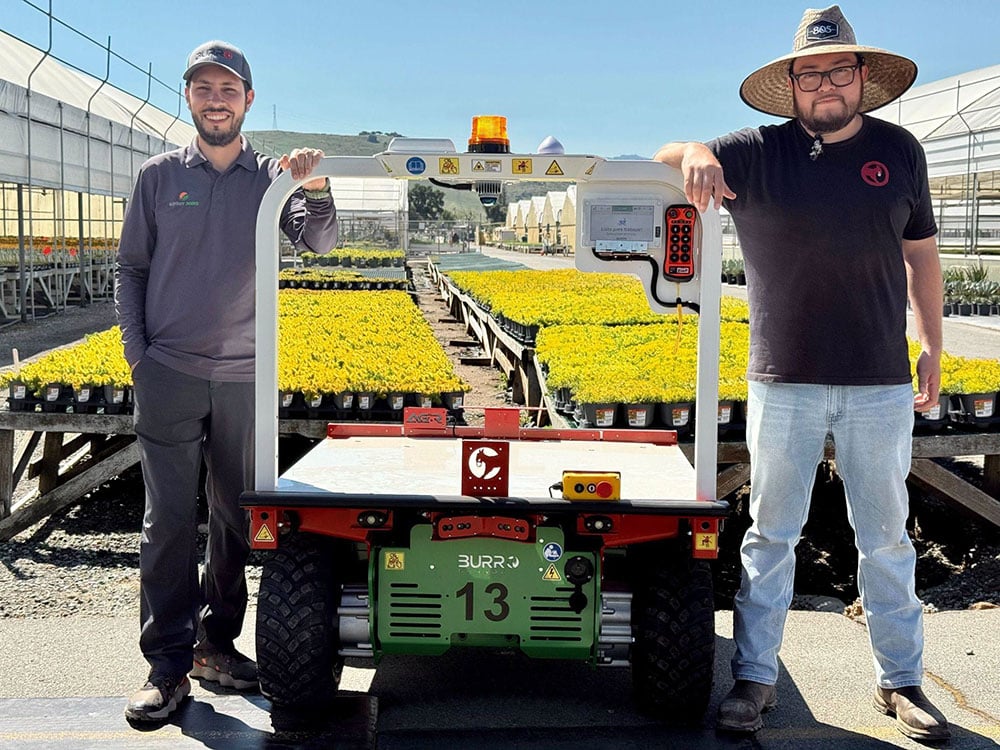
Start with one deployment. Burro is designed to deploy without major infrastructure changes. Start with one robot on one task, see how it performs, and scale from there. You don’t need a fleet to learn whether it works for you.
The Bottom Line
No policy outcome is going to solve the farm labor problem. Even a best-case scenario (cheaper H-2A, faster processing, fewer regulations) doesn’t change the fact that domestic workers aren’t filling agricultural jobs, and that trend is accelerating.
The farms building operational resilience now are the ones that will be in the strongest position in five years. Agricultural robotics are part of that. Not the whole answer, but a real, available, deployable part of it. Whether you are managing broad-acre crops or looking for best labor-saving technologies for greenhouse management, the time to integrate is now.
To learn more about how to integrate agricultural automation into your operations, or talk with a sales person about Burro’s carry, mow, tow, and spray capabilities, drop us a line. We’re here to help your operation excel in any scenario.